Graefekiez in Kreuzberg: A Berlin Neighbourhood Between Water, Historic Architecture and a Strong Community Spirit
Anyone visiting Graefekiez for the first time quickly understands why this neighbourhood has been one of Berlin’s most sought-after residential locations for years. Situated between the Landwehr Canal, Hasenheide and Maybachufer, it has developed into an area that combines urban living with everyday practicality in a remarkable way. Rather than being defined by major landmarks, its character is shaped by historic streets, vibrant neighbourhood life and a high quality of life.
Graefekiez forms part of Kreuzberg 61 and is located in the south-western section of the Friedrichshain-Kreuzberg district. Its identity is not built around a single landmark but emerges from the interaction of many factors: proximity to the water, late nineteenth-century architecture, short everyday distances and well-established local infrastructure. It is precisely this combination that makes the neighbourhood feel surprisingly relaxed despite its central location.
Graefekiez at a Glance
Graefekiez is a historic residential quarter in southern Kreuzberg. It is characterised by its Wilhelminian-era buildings, immediate proximity to the Landwehr Canal and a vibrant sense of community. Cafés, weekly markets, independent shops and green spaces shape daily life, as do excellent public transport connections. Families, creative professionals, working professionals and long-term residents live side by side here. Combining urban vitality with comparatively quiet residential streets, Graefekiez has long been regarded as one of the most desirable residential areas in central Berlin.
Key Facts
Location: Kreuzberg 61, between the Landwehr Canal and Hasenheide
Architecture: Predominantly late nineteenth-century Wilhelminian-era buildings
Resident profile: Families, professionals, creatives and an international community
Leisure and recreation: Landwehr Canal, Böcklerpark, Prinzenbad and Hasenheide
Transport: U7 and U8 underground lines, excellent cycling connections
Notable features: Turkish Market, Admiralbrücke and social preservation area regulations
Where Is Graefekiez Located?
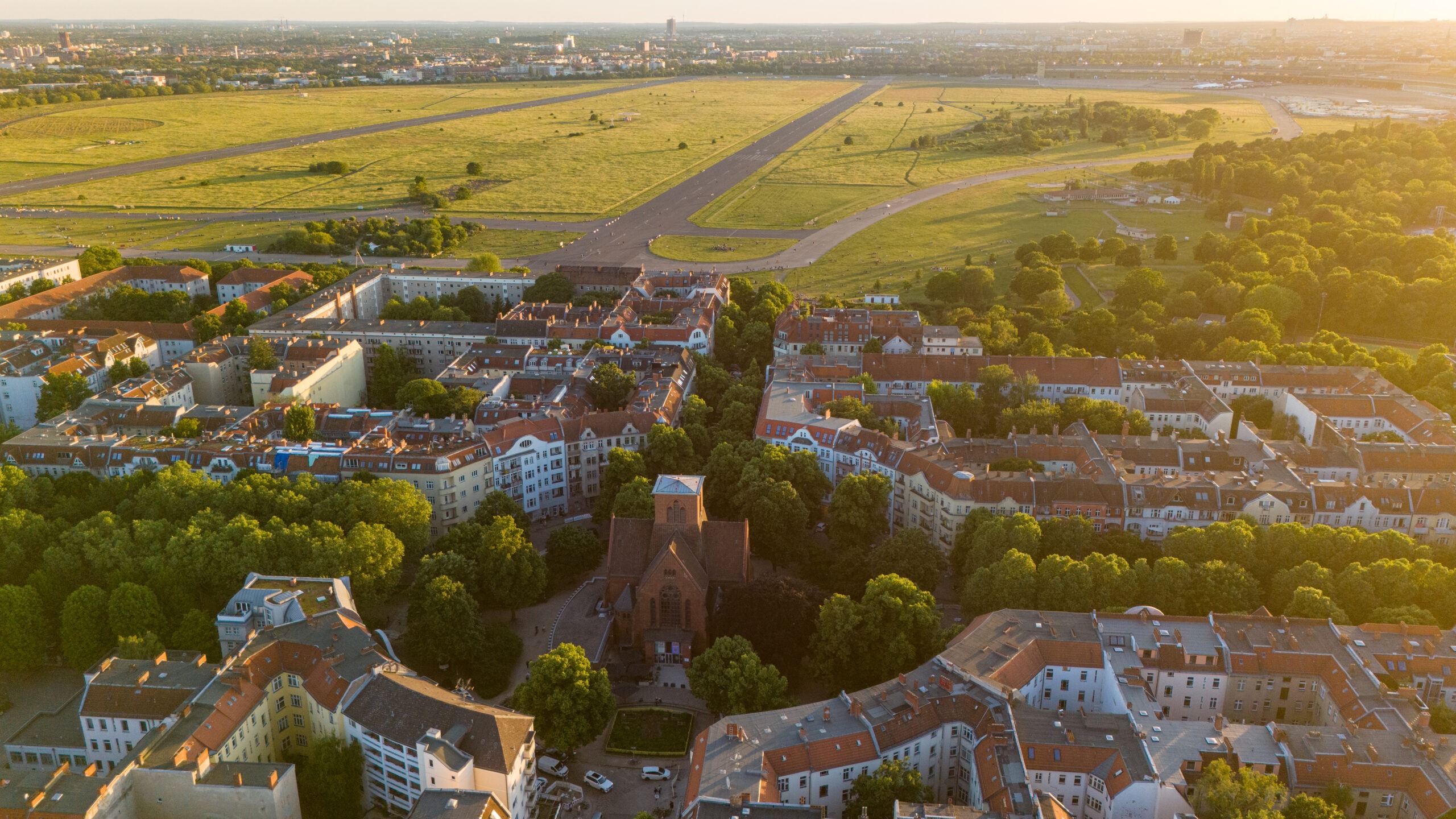
Graefekiez stretches between the Landwehr Canal and Hasenheide in the southern part of Kreuzberg. To the north, the canal forms a natural boundary, while Maybachufer lies to the east and Bergmannkiez borders the area to the west. This location combines proximity to central Berlin with a clearly defined local identity.
Its central position allows residents to reach most daily destinations quickly and easily. At the same time, the relatively self-contained structure of the neighbourhood prevents it from feeling like a thoroughfare. For many residents, this is a key part of its appeal.
What Makes Graefekiez Special?
Graefekiez is defined by its balance. While some Berlin districts are known primarily for their nightlife, gastronomy or tourist attractions, Graefekiez stands out for its remarkable diversity.
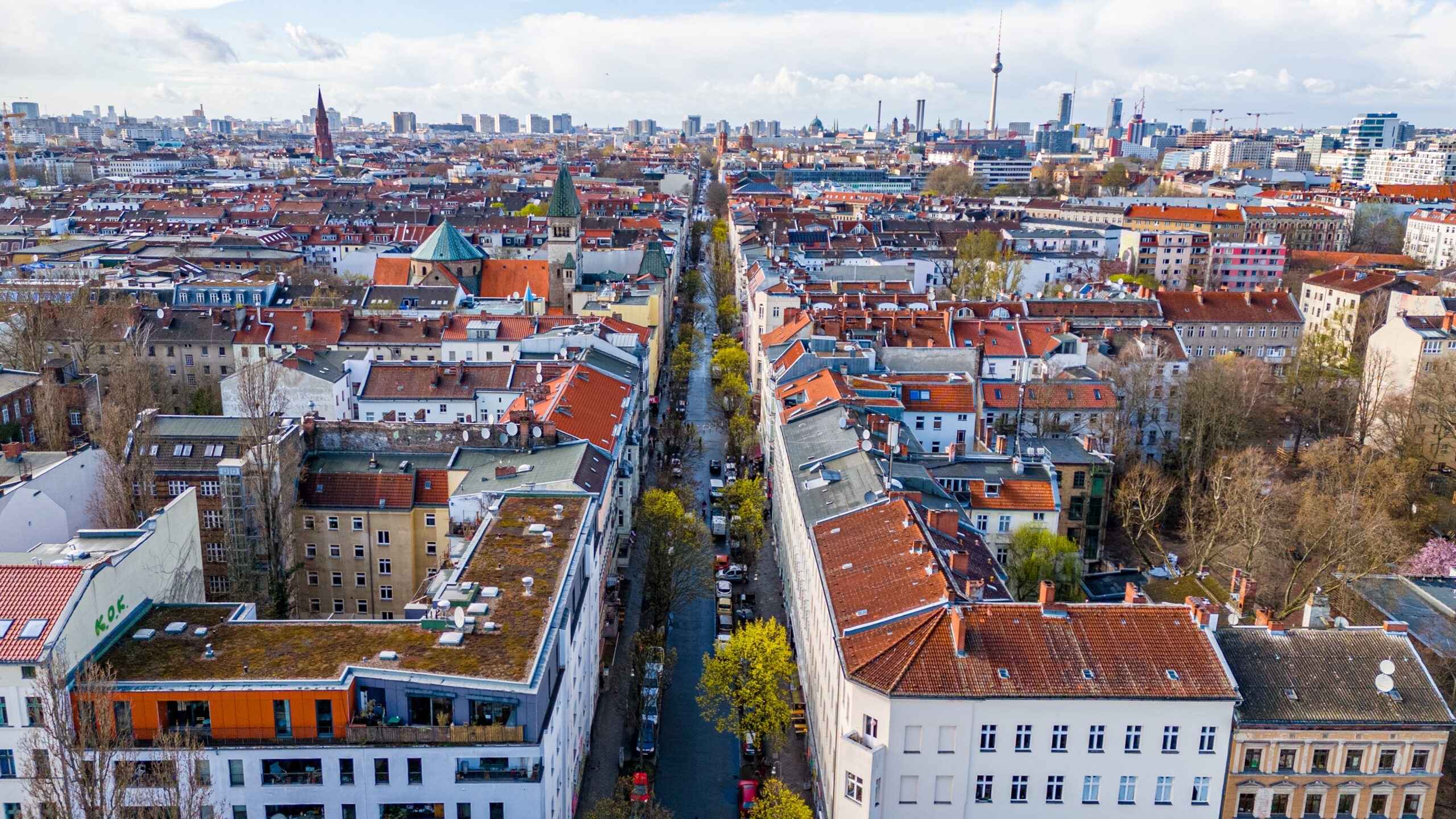
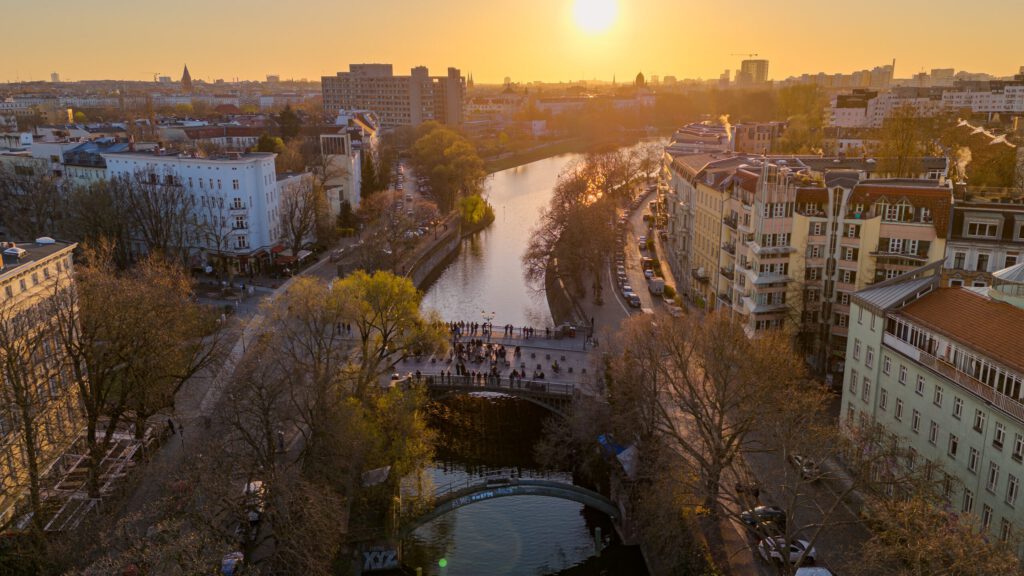
Along the Landwehr Canal, walkers, runners and cyclists share the waterside paths. Graefestraße serves as the everyday heart of the neighbourhood, lined with cafés, restaurants and independent shops. Between these lively areas are quieter residential streets characterised by trees, period façades and a well-established community.
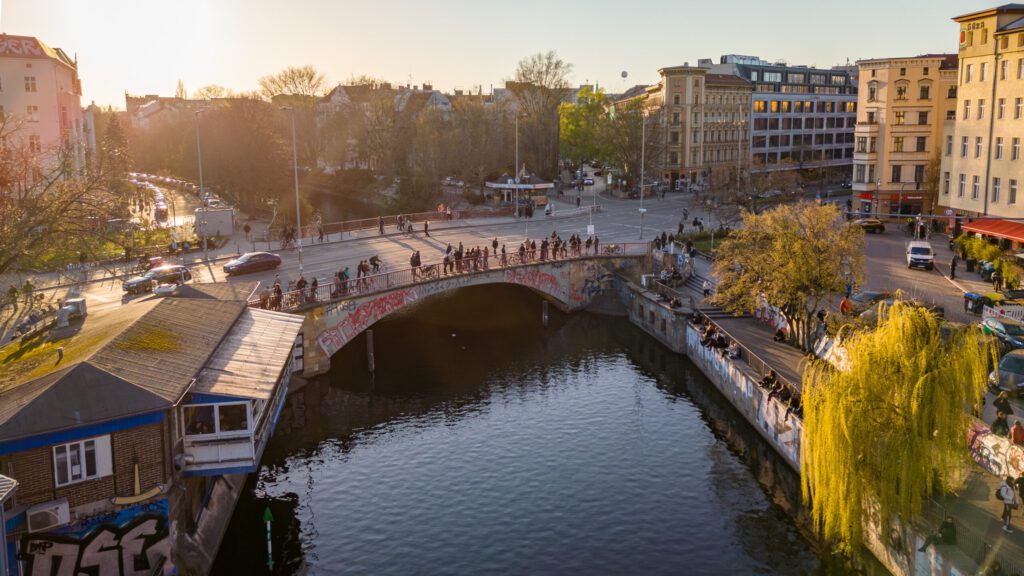
The neighbourhood feels neither curated nor interchangeable. Many of its most significant places owe their importance not to city marketing campaigns, but to the people who have used them for years. Admiralbrücke is a good example. It was not designed as an official gathering place but became one of the area’s best-known locations through the community itself.
Architecture and Townscape
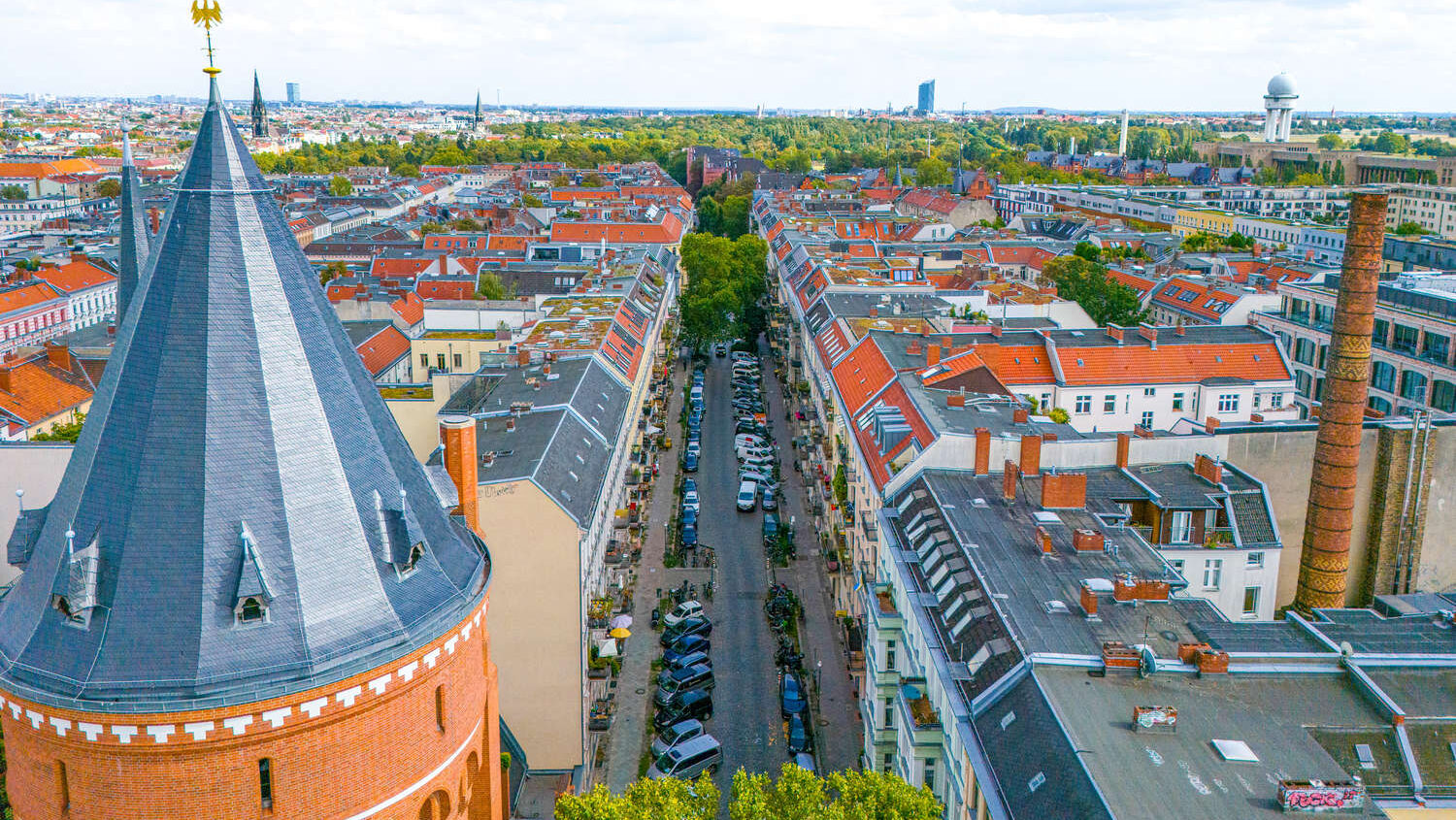
The appearance of Graefekiez is shaped primarily by its Wilhelminian-era buildings. High ceilings, stucco façades, historic staircases and green inner courtyards are common features throughout the neighbourhood.
Particularly along Böckhstraße, Grimmstraße and Graefestraße, numerous well-preserved period buildings define the area’s distinctive character. New developments, by contrast, remain relatively rare. The historic streetscape has largely survived intact for decades, contributing significantly to the identity of the neighbourhood.
Alongside the classic nineteenth-century buildings, there are also some post-war developments, particularly in the southern parts of the area. This mix creates a variety of living environments within a comparatively compact urban district.
What Is It Like to Live in Graefekiez?
Many residents describe Graefekiez as a place where everyday life can be organised with ease. Shops, schools, nurseries, cafés and green spaces are generally within walking distance.
At the same time, the neighbourhood enjoys a level of tranquillity that is unusual for such a central location. While the canal banks and Graefestraße are lively, many side streets are largely unaffected by heavy through traffic. This combination of vibrancy and opportunities for retreat is often cited as one of the area’s defining qualities.
Its social diversity also contributes to its appeal. Families live alongside students, freelancers, creative professionals and older residents, many of whom have been connected to the neighbourhood for decades.
Leisure, Dining and Green Spaces
The Landwehr Canal is one of Graefekiez’s most important open spaces. Its waterside paths are used daily by local residents and provide a rare combination of natural surroundings and urban life.
Another major attraction is the Turkish Market at Maybachufer. Held several times a week, it is one of Berlin’s best-known markets. The offerings range from fresh produce and spices to textiles and international specialities.
For outdoor recreation, residents enjoy both Böcklerpark and Hasenheide. Prinzenbad, one of Berlin’s most historic open-air swimming pools, is also a popular gathering place during the summer months.
Who Is Graefekiez Suitable For?
Graefekiez appeals to a wide range of lifestyles. Families appreciate the traffic-calmed streets, proximity to schools and extensive leisure opportunities. Professionals benefit from the central location and easy access to other parts of Berlin.
Creative professionals and freelancers find an environment rich in cafés, flexible working opportunities and cultural offerings. At the same time, the neighbourhood attracts international residents who value its openness and diversity.
It is precisely this mix of different groups that has helped Graefekiez retain its distinctive character to this day.
The Property Market in Graefekiez
Graefekiez has been one of Berlin’s most sought-after residential areas for many years. The combination of historic architecture, waterside living, strong infrastructure and limited development potential continues to support robust demand.
However, there are notable differences within the neighbourhood itself. Properties close to the canal are often perceived differently from those nearer Hasenheide or Urbanstraße. Factors such as social preservation regulations, building condition and micro-location also play an important role in the assessment of individual properties.
For both owners and prospective buyers, it is therefore worth paying close attention to the specific characteristics of each location.
Frequently Asked Questions About Graefekiez
Is Graefekiez family-friendly?
Yes. Schools, nurseries, playgrounds, green spaces and traffic-calmed streets make the neighbourhood particularly attractive for families.
Why is Graefekiez so popular?
Its popularity stems largely from the combination of waterside living, historic architecture, excellent infrastructure and a high quality of life.
Which underground stations are nearby?
The main stations are Schönleinstraße (U8) and Südstern (U7).
Are there many period apartments?
Yes. The streetscape is dominated by late nineteenth-century buildings.
Is Graefekiez subject to social preservation regulations? Large parts of the neighbourhood fall within a social preservation area, meaning that certain structural alterations may require official approval.
Conclusion
Graefekiez is one of those Berlin residential quarters whose appeal is not based on short-term trends. Its strength lies in the combination of historic architecture, an established community, waterside living and urban infrastructure. The neighbourhood offers the advantages of city-centre life without losing its residential character.
Anyone wishing to understand why certain Berlin districts remain desirable over decades will find Graefekiez an excellent example. Here, quality of life is not created by individual highlights but by the interaction of many smaller factors that shape daily life over the long term.
A Local Perspective from Goldschwarz Immobilien
As a property company with many years of experience in Kreuzberg, Goldschwarz Immobilien GmbH has observed the development of Graefekiez from close quarters for a long time. From a local perspective, the neighbourhood remains one of the most stable residential locations in southern Kreuzberg. In particular, the combination of historic building stock, limited supply and a high quality of life continues to shape demand in a lasting way.
Owners wishing to gain a clearer understanding of their property’s current market position benefit from an analysis that considers not only the wider Berlin market but also the unique characteristics of the neighbourhood itself. A well-founded valuation always begins with an understanding of the location—and that is precisely where local market knowledge proves most valuable.